- Feb 17, 2026
- 4 min read
From One Wedding to a Micro-SaaS
Built in 2025, revisited now: what I made, and what I’d do differently today.
It started as a favour. A couple I knew wanted every guest’s photos in one place after their wedding, instead of scattered across a hundred phones. I set up a small self-hosted photo drop on a VPS, with a QR code pointing guests to it.
It worked, and that raised the obvious question: could this be a product?
The offer, in three lines
- People get married.
- They love photos.
- A lot of those photos stay lost in guests’ phones.
So: a wedding page with a QR code, a place for guests to upload, and the couple gets everything in one place afterwards. Simple to say. Most of 2025 went into finding out what “simple” costs.
The napkin maths
Before building anything bigger, I sized it. This is a guesstimate, and I treated it like one:
| Step | Assumption | Couples |
|---|---|---|
| Weddings a year in Poland | ~160,000 | 160,000 |
| Hear about the service | 5% | 8,000 |
| Interested enough to look | 20% | 1,600 |
| Pay | 10% | ~160 |
Then the unit economics. Say a package costs $75 for 50 GB, and storage on a VPS runs about $100 a month for 300 GB. Infrastructure is then roughly 22% of revenue. People buy once (it’s one wedding), so lifetime value is the price. That gives a hard ceiling: acquiring a customer has to cost less than about $60, or every sale loses money.
That one number shaped everything after it. It ruled out expensive ads as the main channel, and it made partners (photographers, venues) look much more attractive than strangers on social media.
Version 1: a self-hosted file browser
The first version was a branded file browser on a VPS: login for the couple, upload for guests, a QR code generated by a small Flask app. It was quick to stand up and it did the job for one event.
It was also the wrong shape for a product: a server to look after, accounts to manage by hand, and storage costs that grow whether or not anyone pays.
Version 2: whatever can be static, is static
For the rebuild I got the domain, slubnechwile.com (“wedding moments” in Polish), moved its DNS to Cloudflare, and changed the rule: anything that can run in the browser, runs in the browser.
- The free part is fully static. Type your wedding page link, get a branded QR code and a print-ready PDF in several sizes. Both are generated client-side with QRCode.js and jsPDF. No server, no account, nothing to break.
- The paid part is the only part with a backend. The plan: after paying, the couple gets a page to share and a password for guests, and about a week before the wedding, uploads open to object storage (Cloudflare R2).
- Auth and data use managed or tiny backends (Firebase and PocketBase), not a server I maintain per customer.
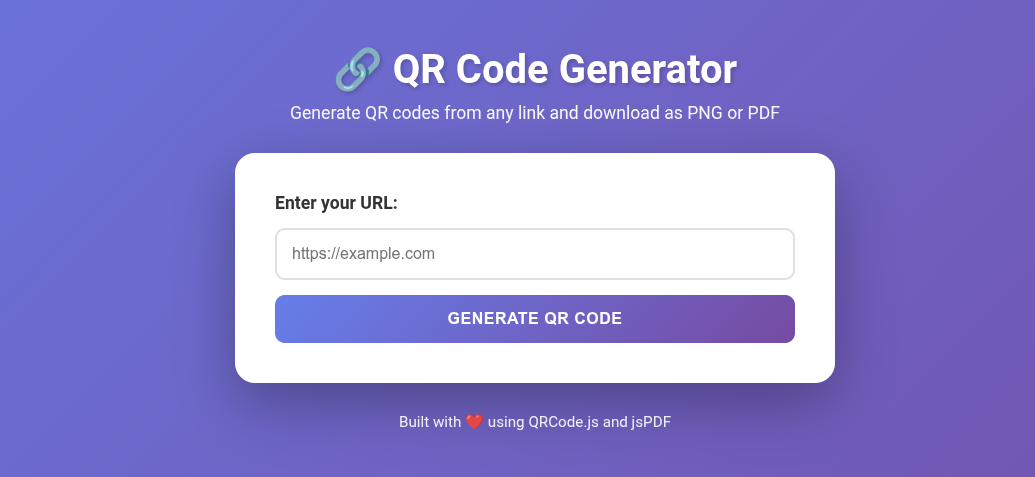
The free QR and PDF tool doubles as the lead magnet: useful on its own, and it brings exactly the right people (couples planning a wedding) to the page where the paid tier lives.
Getting it in front of people
Where do engaged couples already look? I listed three kinds of channel:
- Search ads for intent (“wedding photo sharing”, “QR code wedding photos”).
- Social ads targeted by life events and wedding interests.
- Partners: photographers get asked about guest photos all the time. A referral or a free premium tier for them reaches couples at the right moment, and at a cost that fits under that $60.
For the partner side I started building a list of wedding photographers from public data, with enrichment.
What I’d do differently now
- Sell before scaling the stack. Version 1 was enough to take a payment by hand. I’d have asked three couples to pay for it before writing version 2.
- Start with partners, not ads. The CAC ceiling made it obvious, and I still spent time on ad platforms first.
- Keep the static-first rule from day one. The free tool costs nothing to run and is the best marketing the product has.
- Write the numbers down where I’ll see them: price, cost per customer, infrastructure share. Every decision got easier once they were on one page.
Takeaways
- A favour that works is a hypothesis, not a product. Test it with a price.
- Do the CAC ceiling before choosing channels. It decides which channels are even possible.
- Static first: free features in the browser, a backend only where money changes hands.
- Partners beat strangers when customers buy once.